No More Midnight Ovens: Weber Vacuum Cooling Turns Every Loaf into a Super‑Baguette—While Slashing Energy 20 %
Picture a bakery running in daylight: bakers wide-awake and humming, ovens on shorter cycles, loaves cooling under vacuum into shatter-crisp “super-baguettes” while gas use drops 20 %. That’s the power of the Weber Vacuum Cooler—one smart cabinet that swaps night shifts for day shifts and boosts quality and sustainability.


🥖 A French Innovation, Perfected by Weber
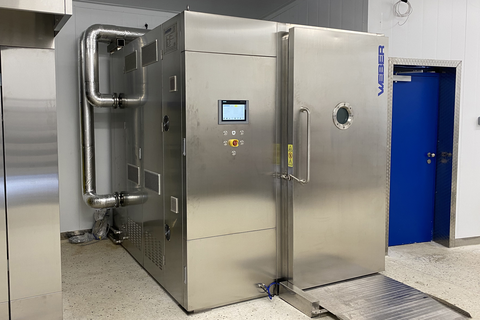
The breakthrough? A vacuum chamber that rapidly cools down hot, freshly baked bread by removing air and moisture. Originally used in flower and fruit farming, this cooling method was adapted by French bakers in Brittany—facing humid weather and tricky crust formation. Weber brought this innovation to industrial and artisan bakeries across Europe.
Today, the results speak for themselves:
- Crustier baguettes with more volume
- 20–30% faster production cycles
- Lower energy bills
- Less stress on staff—no more night shifts
- Better hygiene through faster microbial risk control
🌞 Daytime Baking, Happier Teams
The innovation spread quickly. For Dutch bakeries like Oonk’s, dealing with staff shortages and unattractive night hours, vacuum cooling offered a game-changing advantage.
“With this system, we can bake during the day,” Oonk says. “That makes my business—and the profession itself—more appealing to new talent.”
He believed in the technology, invested around €200,000, and now joins a small but growing group of Dutch bakeries using it.
🔥 New Baking Strategy
Previously, loaves were baked for 35 minutes at 250°C, with the oven hatch opened in the last 10 minutes to let steam escape and create the signature crust. Today, Oonk’s team bakes at a higher temperature (260°C) for just 25 minutes, without opening the hatch at all.
The vacuum cooler now handles the moisture removal, enhancing crust quality even more efficiently. Inside the chamber, the air pressure drops from 900 millibar to just 80 millibar, pulling moisture out rapidly.
“The oven stays closed, and the crust is even better than before,” Oonk notes.
⚡ Energy Efficiency and a Greener Future
This change doesn’t just affect work hours or product quality—it’s also better for the planet.
Oonk’s gas-fired oven runs for a shorter time, cutting his gas bill by roughly 20%. With Dutch bakery ovens consuming around 150 million cubic meters of gas annually, this technology could play a major role in national energy transition goals.
“It’s a big investment, but it pays off,” Oonk says. “And combining vacuum cooling with an electric oven would be even more sustainable—if only powerful electric ovens existed.”
🍞 Longer Freshness, Less Waste
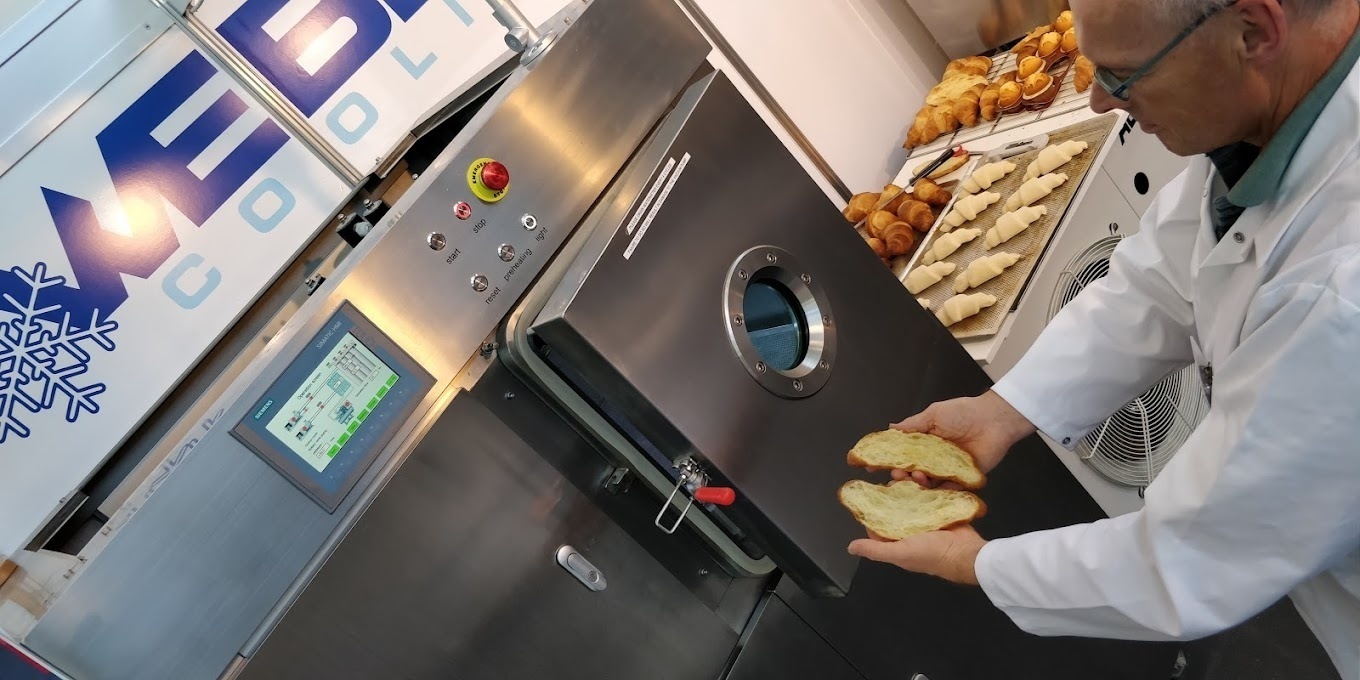
The real magic, however, happens after the bake. While cooling, the bread continues to cook inside. The result? A denser loaf with an ultra-thin crust that retains 30% more moisture—keeping the bread fresher for longer.
“You can bake in the afternoon for the next day,” says Oonk. “That gives us more flexibility and reduces food waste.”
Although nighttime production still accounts for the bulk of output, Oonk envisions a future with alternating day and night shifts. “We’ll get there,” he says.
As Van der Kuijl, one of his bakers, gently strokes a cooled loaf and cracks it open, he smiles:
“With this technique, you’ll never again suffer the sadness of a collapsed bread.”
Oonk agrees, handing out slices: “Try it—deliciously soft on the inside, with the thinnest, crispiest crust.”